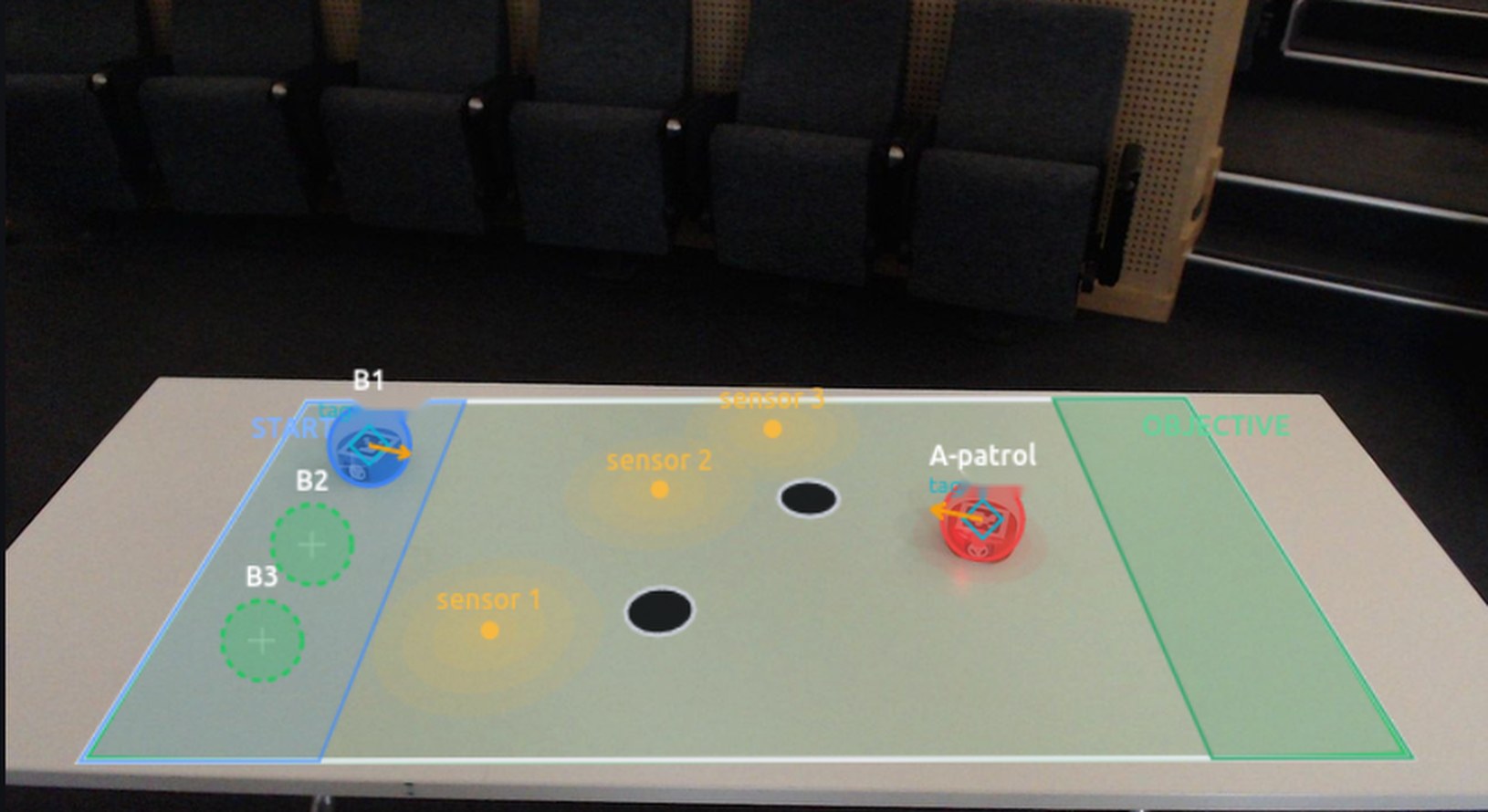
Real and virtual pods, one world
Real pods on the table and virtual ones in software share one arena, and an exercise cannot tell them apart. A few robots stand in for a larger force.
Small robots on a table or the floor, with a world built around them in software: virtual units, sensors, hazards and an opposing force. Students program them. Officers rehearse with them.
A pod on the table does what the code says, in Python or any other language, or in plain English with no code at all.
A whole class joins from their laptops with a code, each with a pod of their own, on the table in the room or on our hosted arena from any browser.
Virtual units, simulated sensors, gas and weapons fire under rules of engagement, with the picture on ATAK laid over real ground.
One arena, with the world an exercise needs built around the pods.
Real pods on the table and virtual ones in software share one arena, and an exercise cannot tell them apart. A few robots stand in for a larger force.
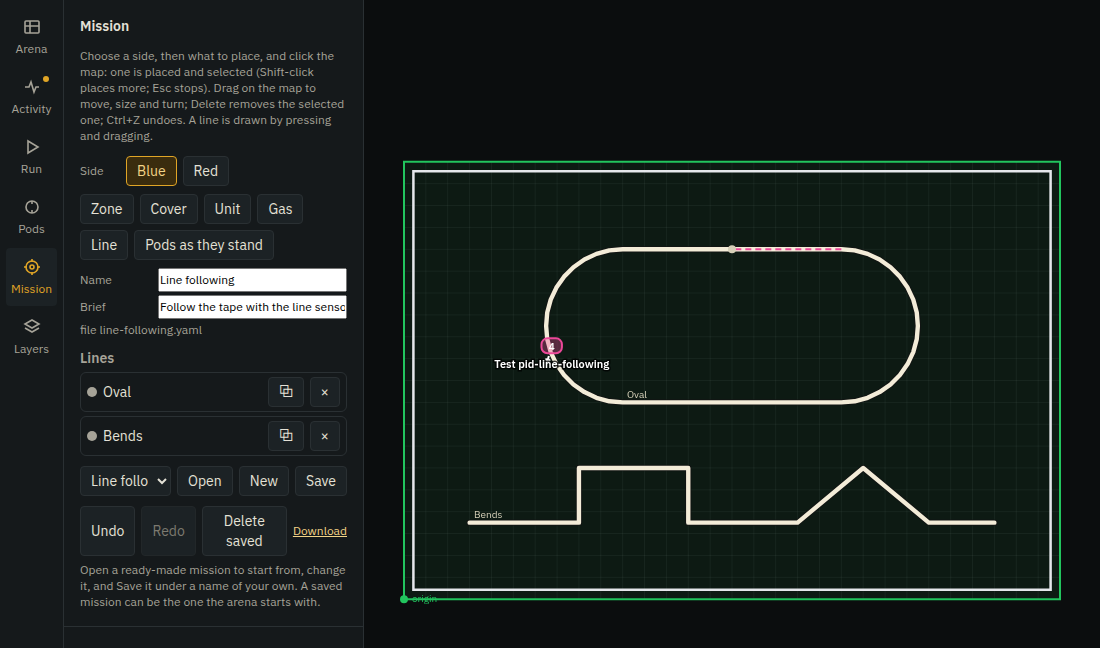
Draw the mission on the map: zones, cover, sensors, a gas release, a line of tape. Twelve simulated sensors, ground in relief from real elevation data, and radio links that fade with distance and terrain.
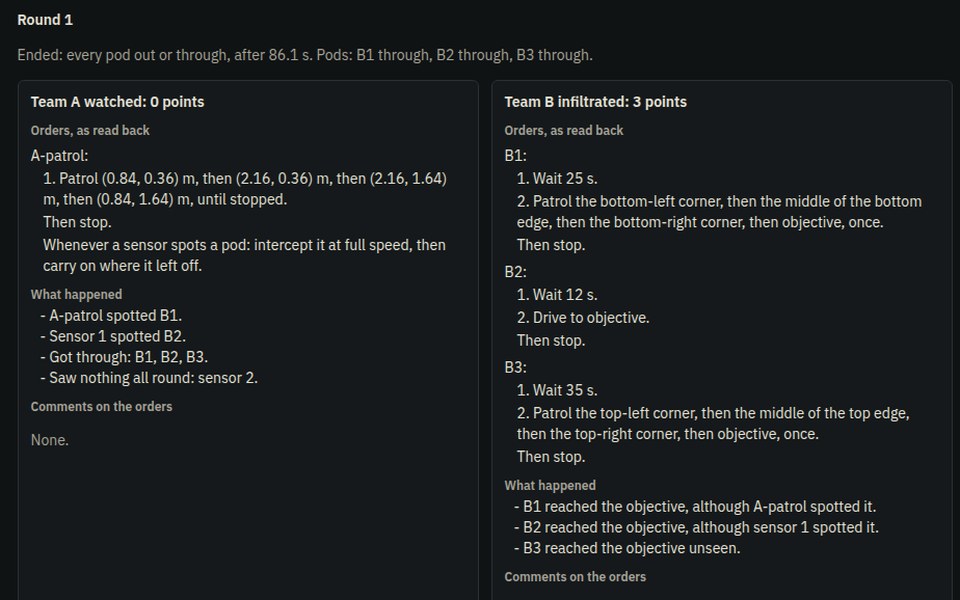
Each exercise briefs the room, enforces its rules, ends on time and marks the result. What a room played is kept as a report.
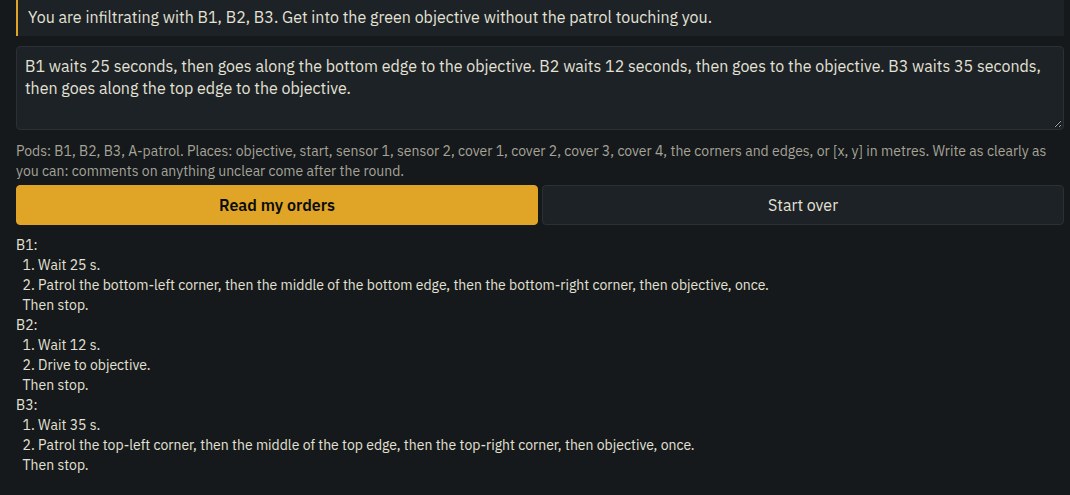
Orders in plain English, read back before anything moves; or a program in Python or any other language, driving one pod or a whole swarm.
In your room, or from any browser.
In your room. A camera and a projector on a tripod, a small computer and the pods. No markers to lay out, no walls to build, nothing to install.
The box starts by itself and opens its own Wi-Fi. Join it from any laptop and the console opens in a browser.
Put a pod under the camera and press Calibrate. It drives one small circle, and from that the system knows where the table lies.
Click two corners of a rectangle on the screen, or trace another shape. The pods stay inside it.
From any browser. Nothing in the room but the laptops. The arenas run on our server. A teacher's account is by invitation; the people joining need no account at all.
Sign in and make a room: a class, a workshop or a rehearsal. It gets a six-letter code and an arena for each group.
Each person types the code, or scans it from the big screen, and their name, and gets a pod of their own. The same name gets the same pod back.
The group's arena is on the projector or in 3D on the big screen. Every exercise briefs the room, keeps its rules and marks the result. Today the hosted arena runs virtual pods; real pods from a laptop's webcam are being tested.
Lessons from plain English to control and planning, on real robots in the room or online.
Explore teaching →
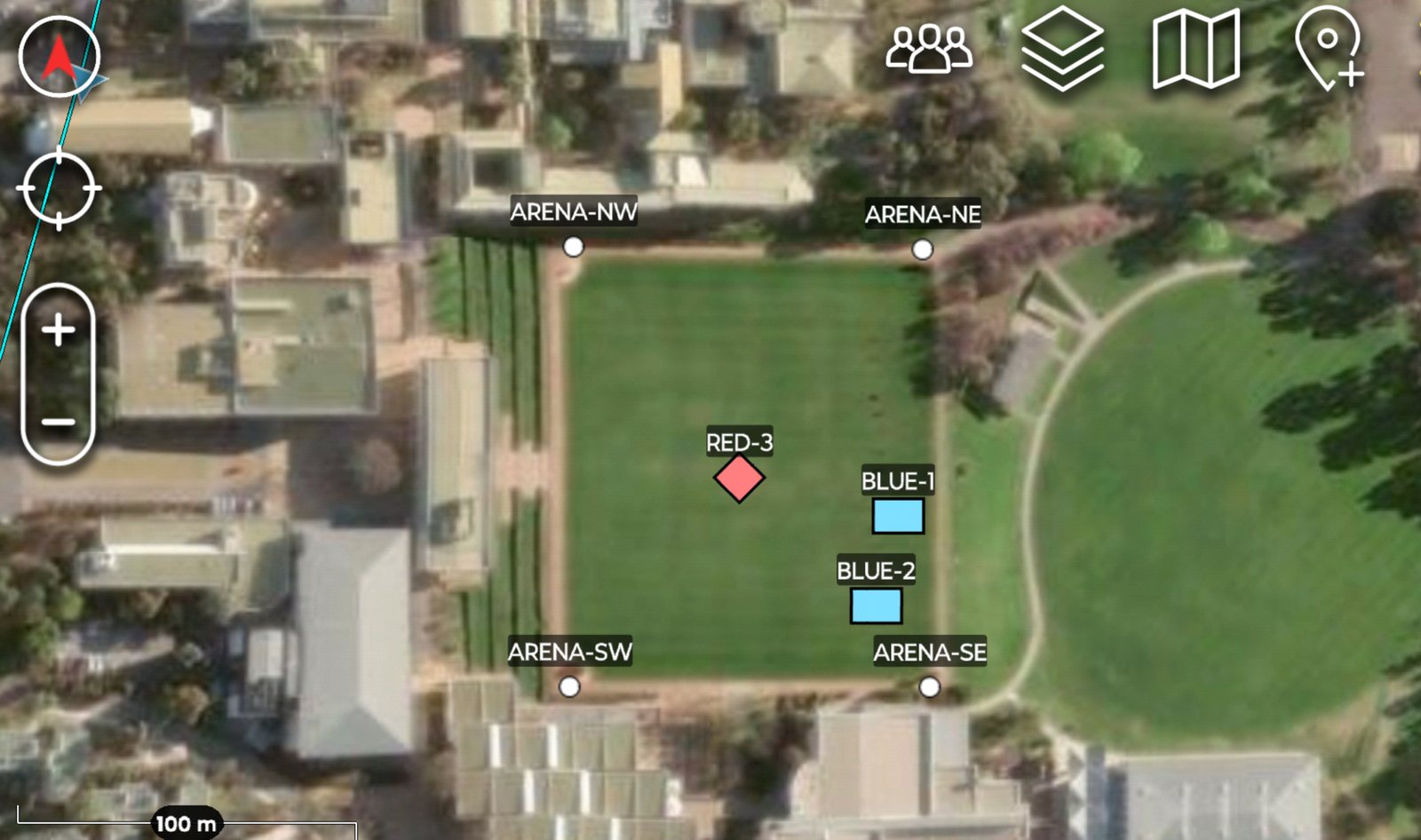
Wargaming on a table or the floor, with an opposing force, rules of engagement and the picture on ATAK.
Explore military use →
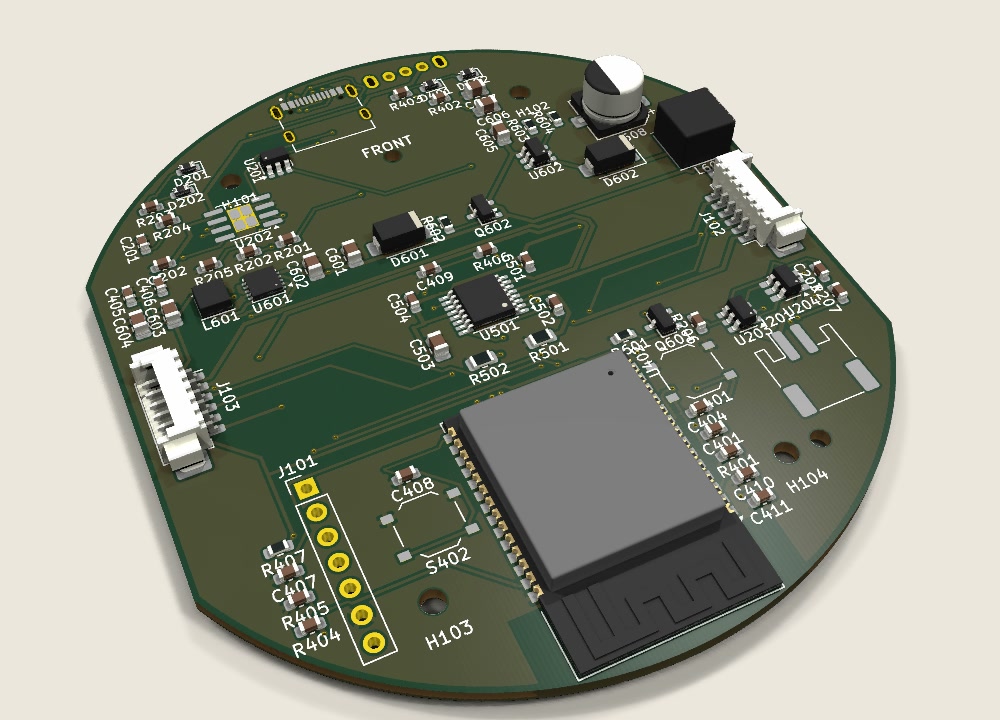
The kit, the pods, and how your own code drives them.
See how it works →
Tell us what you want to teach or rehearse. We will show you what the platform does today, and say what it would take if it does not yet. Plato Pod has been used in teaching at UNSW Canberra. Pricing on request.
Office 302, Building 16