Wargaming on a table.
A handful of real robots, a force of virtual units around them, and the rules that decide who sees whom and what a shot does. Officers rehearse on the desk and watch the same exercise on ATAK.
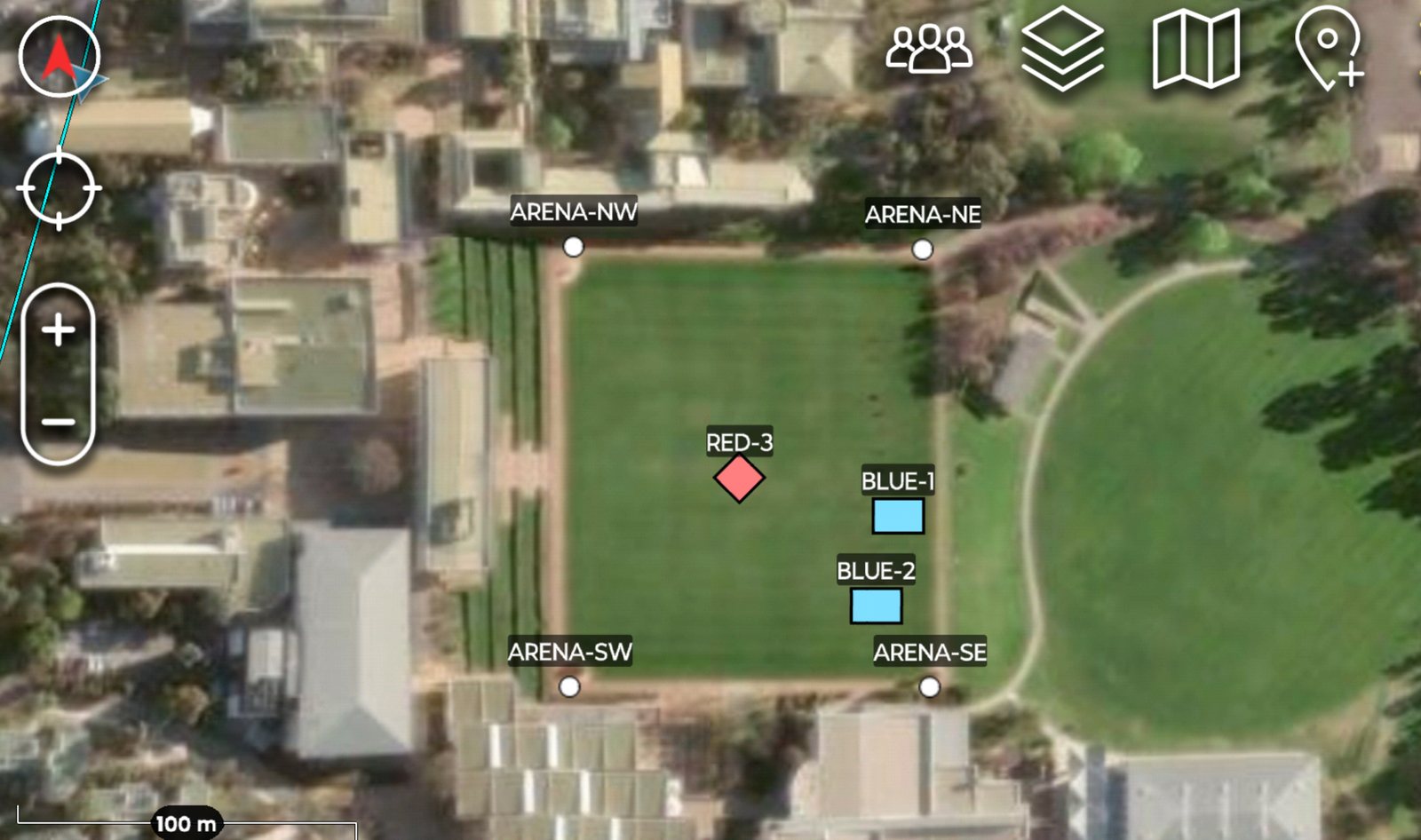
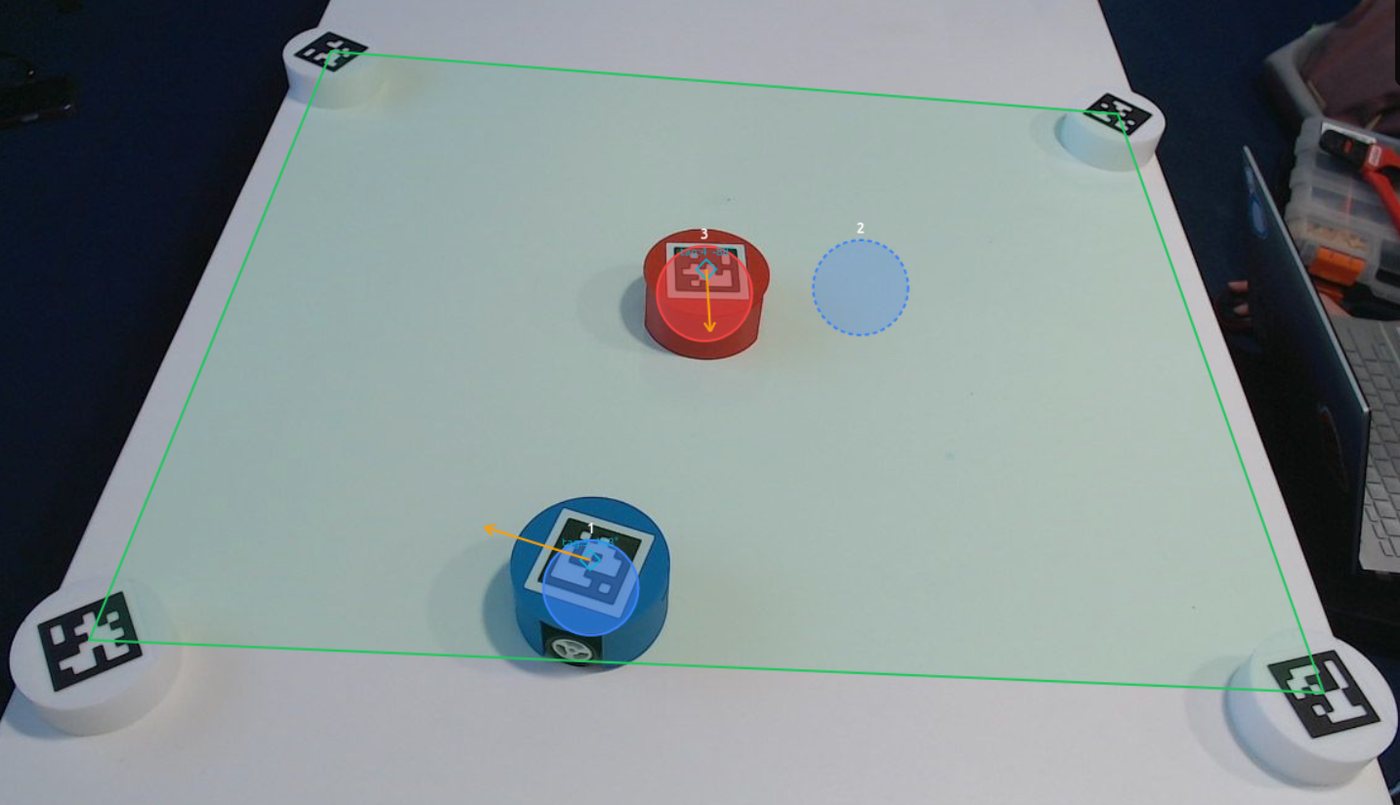
A mixed force
Every unit is blue or red and has a role, from a soldier to a tank. Virtual units are spawned alongside the pods and read the same world, so two robots on the desk can stand in for a much larger force.
An adversary that thinks for itself
The opposing force runs on its own: it patrols, observes, engages and withdraws, deciding ten times a second from what it can see.
Fire, cover and rules of engagement
- EngagementEvery shot resolved against the weapon, line of sight, cover and visibility.
- DamageScaled by armour: one hit stops a soldier, four a tank. A damaged unit slows and fires less well, however it is driven.
- Rules of engagementWeapons hold, tight or free, checked before a round resolves.
- StrikesCalled by the umpire on one unit or an area.
CBRN on the desk
An umpire can release a gas plume or shift the wind mid-exercise. The pods' gas sensors read the change, with the lag of a real detector, and ATAK redraws the plume at once.
Exercises are configuration
An exercise is a file, not a program: the ground, the forces, the hazards and the rules. Nine ship with the platform, among them capture the flag, cordon and search, and a CBRN reconnaissance patrol. Writing a new one needs no code.
The picture on ATAK
Positions, zones, sensor readings, engagements and casualties go out as Cursor on Target, so the exercise appears on ATAK phones and tablets, placed on real ground at the exercise's scale. Units on the desk move across a real map.
Plain English, for officers
The plain-English track lets an officer give the pods orders in words rather than code. Stating intent precisely enough for a robot to act on it is a skill in its own right, and the arena shows at once where an order was unclear.
Beyond the desk
The tactical layer is built to run over dismounted units carrying GNSS as well as pods under a camera: positions come in through one interface, and the rest does not care where they come from. The GNSS side of that interface is not written yet.